
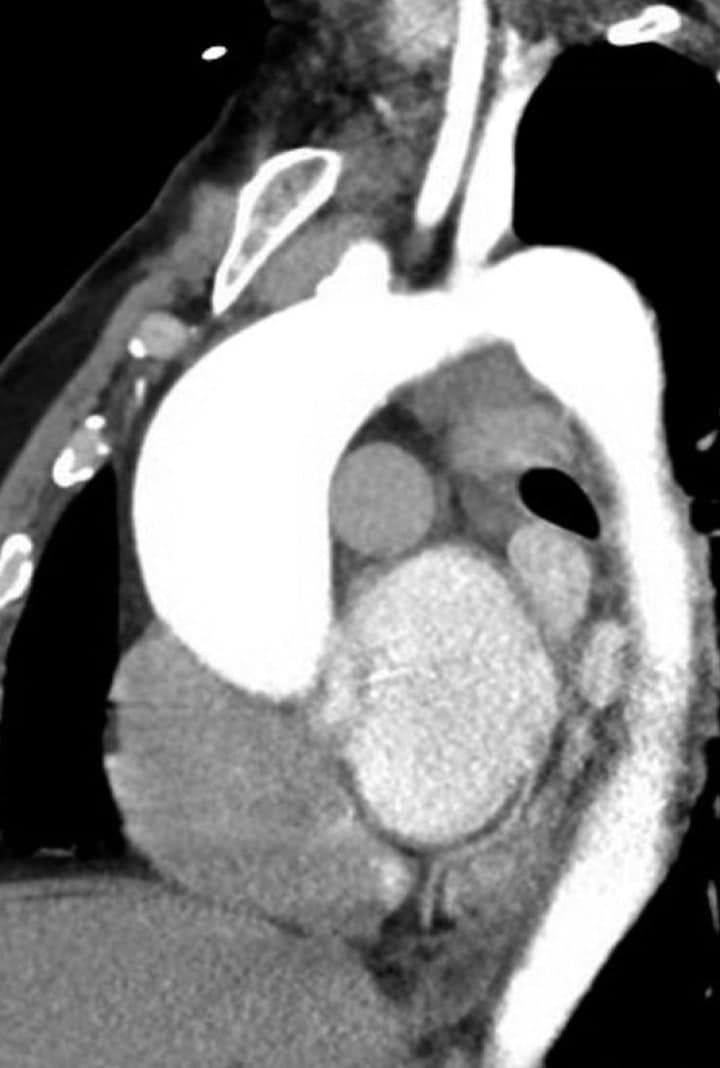
CT
Computed tomography
CT can provide detailed images of the aorta and help clinicians assess its size, shape, and location.
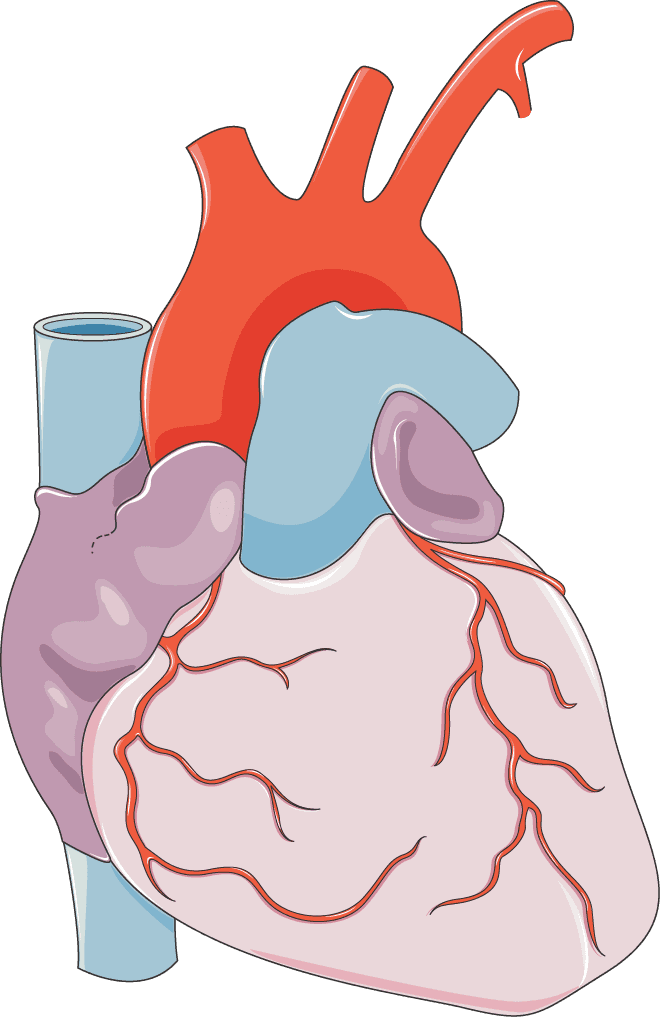
Aortic disease and dissection
The aorta is the body’s largest artery. Thoracic aortic disease includes several conditions affecting the part of the aorta in the chest. An aneurysm is an abnormal enlargement of the vessel.
A complication clinicians are concerned about is aortic dissection. A dissection occurs when a tear allows blood to separate layers of the aortic wall. It is a medical emergency.
Learn from the National Heart, Lung, and Blood Institute (opens in a new tab)Seeing the aorta
CT can provide detailed images of the aorta and help clinicians assess its size, shape, and location.
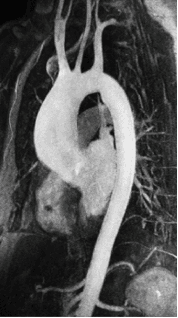
MRI can also show the aorta’s size, shape, and location without using ionizing radiation.
Why blood flow matters
No single measurement tells the whole story. Clinicians consider aortic size and growth together with symptoms, family history, genetic findings, valve anatomy, and other factors.
Researchers study whether blood speed and forces on the aortic wall can add context to what clinicians see on anatomical images.
Third Coast Dynamics is developing technology to help clinicians build a more individualized picture of aortic disease by bringing blood-flow information together with anatomy.
This page is for general educational information only. It does not diagnose a condition, recommend a test or treatment, or replace advice from a qualified healthcare professional. This website is not a channel for urgent medical communication. Do not send medical records, imaging, diagnoses, symptoms, or other personal health information. Discuss personal medical questions with a qualified healthcare professional. For an emergency, contact local emergency services.